What Are the Top Tourist Places to Visit During a Delhi Tour?
July 24, 2026
What Are the Top Tourist Places to Visit During a Delhi Tour?
Delhi is one of the most fascinating cities in India, where centuries of history, vibrant culture, and modern attractions come together to create an unforgettable travel experience. As the capital of India, Delhi welcomes millions of visitors every year who come to explore its magnificent monuments, bustling markets, spiritual landmarks, lush gardens, and world-famous food. Whether you are visiting for the first time or returning to discover more of its hidden gems, a well-planned Delhi Tour allows you to experience the very best that the city has to offer.
From UNESCO World Heritage Sites and grand Mughal architecture to colonial-era buildings and colorful bazaars, Delhi has something for every type of traveler. Families, solo travelers, couples, photographers, history enthusiasts, and food lovers all find unique reasons to fall in love with this remarkable city. If you are planning your next vacation, this guide will help you discover the top tourist places that deserve a place on your itinerary.
Why Delhi Is a Must-Visit Destination
Delhi is more than just India's political capital. It is a city that tells the story of thousands of years of civilization through its monuments, museums, temples, and neighborhoods. Every corner reflects a different chapter of India's rich heritage, from the rule of the Delhi Sultanate and the Mughal Empire to British colonial influence and modern urban development.
One of the biggest advantages of choosing a Delhi Tour is the city's diversity. You can spend your morning exploring a centuries-old fort, enjoy authentic street food for lunch, visit a peaceful temple in the afternoon, and dine at a luxury restaurant in the evening. Few destinations in the world offer such a remarkable combination of history, culture, entertainment, and convenience within a single city.
Delhi is also well connected by international airports, high-speed trains, highways, and an efficient metro network, making it an excellent starting point for exploring other destinations such as Agra, Jaipur, and the Golden Triangle.
Red Fort – A Symbol of India's Rich Heritage
The Red Fort is one of Delhi's most iconic landmarks and an essential stop for every visitor. Built in 1648 by Mughal Emperor Shah Jahan, this UNESCO World Heritage Site served as the main residence of the Mughal rulers for nearly 200 years.
Constructed from magnificent red sandstone, the fort features massive defensive walls, elegant palaces, royal halls, beautiful gardens, museums, and intricate Mughal architecture. Visitors can walk through the Lahori Gate, explore Diwan-i-Aam and Diwan-i-Khas, and admire the craftsmanship that has survived for centuries.
Every year, India's Independence Day celebrations begin here as the Prime Minister addresses the nation from the historic ramparts. Including the Red Fort in your Delhi Tour provides an unforgettable introduction to India's glorious past.
Jama Masjid – India's Largest Mosque
Located just a short walk from the Red Fort, Jama Masjid is one of the largest and most impressive mosques in India. Commissioned by Shah Jahan in the 17th century, this magnificent structure can accommodate more than 25,000 worshippers in its vast courtyard.
The mosque's elegant marble domes, towering minarets, and intricate carvings showcase the brilliance of Mughal architecture. Visitors are welcome outside prayer times and may climb one of the minarets for breathtaking panoramic views of Old Delhi.
The peaceful atmosphere inside the mosque contrasts beautifully with the lively streets outside, offering travelers both spiritual and architectural inspiration.
Chandni Chowk – Delhi's Historic Market
No visit to Delhi is complete without experiencing Chandni Chowk. This centuries-old marketplace remains one of India's busiest commercial districts and perfectly captures the energy and charm of Old Delhi.
Walking through its narrow lanes reveals colorful shops selling jewelry, textiles, spices, handicrafts, electronics, wedding attire, and traditional Indian sweets. Cycle rickshaw rides offer an authentic way to explore the market while avoiding the crowds.
Food lovers especially appreciate Chandni Chowk's legendary street food. Famous dishes include parathas, chole bhature, jalebi, samosas, kebabs, stuffed kulchas, and creamy lassi. Every bite tells a story of Delhi's rich culinary traditions.
India Gate – The Pride of New Delhi
India Gate stands proudly in the heart of New Delhi as a memorial honoring thousands of Indian soldiers who sacrificed their lives during World War I. Designed by Sir Edwin Lutyens, this impressive sandstone monument has become one of the city's most recognizable landmarks.
Beautiful gardens surround the monument, making it a popular gathering place for families, photographers, and evening visitors. During sunset, the illuminated structure creates a spectacular atmosphere that attracts both locals and tourists.
The nearby National War Memorial adds further historical significance and offers visitors an opportunity to pay tribute to India's brave soldiers.
Humayun's Tomb – Inspiration Behind the Taj Mahal
Humayun's Tomb is another UNESCO World Heritage Site that deserves a place on every itinerary. Built in the 16th century, this magnificent mausoleum combines Persian architectural styles with traditional Indian craftsmanship.
Many historians consider Humayun's Tomb the architectural inspiration for the Taj Mahal due to its symmetrical gardens, elegant domes, and grand design. Visitors enjoy peaceful walks through beautifully landscaped gardens while admiring the monument's stunning red sandstone and white marble construction.
Photography enthusiasts particularly appreciate the monument's symmetry, making it one of Delhi's most photogenic attractions.
Qutub Minar – The Tallest Brick Minaret
Standing over 72 meters tall, Qutub Minar is the tallest brick minaret in the world and one of Delhi's most visited historical monuments.
Built during the 12th century, this UNESCO World Heritage Site features detailed Quranic inscriptions, intricate carvings, ancient ruins, and beautifully landscaped gardens. The surrounding archaeological complex includes the famous Iron Pillar, which has resisted rust for over 1,600 years despite exposure to the elements.
A Delhi Tour feels incomplete without witnessing this extraordinary example of early Indo-Islamic architecture.
Lotus Temple – A Peaceful Architectural Wonder
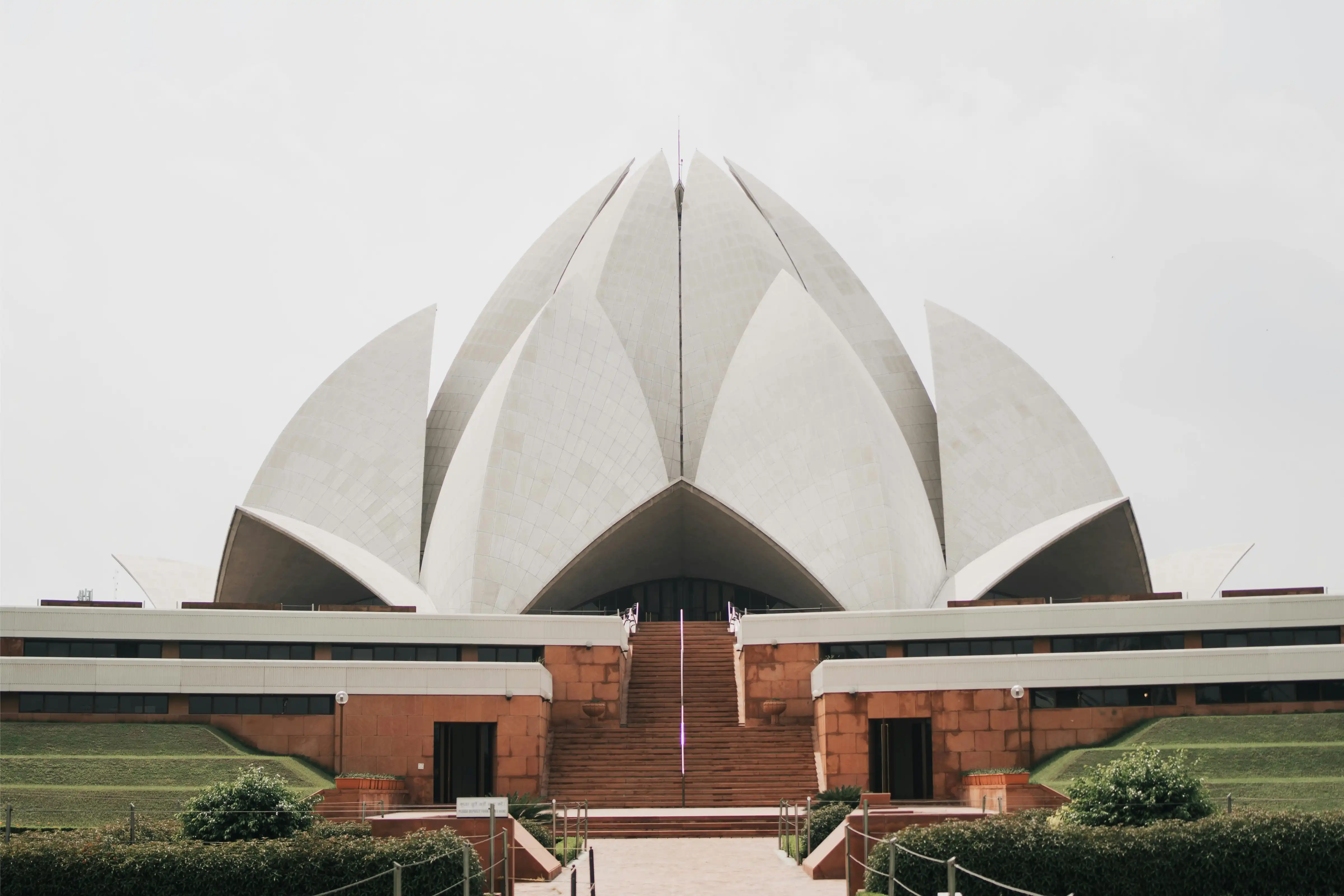
The Lotus Temple is among Delhi's most unique landmarks. Designed in the shape of a blooming lotus flower, this Baháʼí House of Worship welcomes visitors from every religion and background.
Unlike many religious sites, the Lotus Temple encourages complete silence inside the prayer hall, allowing visitors to meditate and reflect peacefully. Its striking white marble petals, tranquil gardens, and reflecting pools make it one of the city's most photographed attractions.
The temple's universal message of unity and peace attracts millions of visitors from around the world each year.
Akshardham Temple – A Cultural Masterpiece
Swaminarayan Akshardham is much more than a temple. It is a magnificent cultural complex showcasing India's spiritual traditions, ancient architecture, artistic craftsmanship, and timeless values.
Visitors can admire thousands of detailed carvings, exhibitions about Indian civilization, musical fountain shows, and beautifully landscaped gardens. Evening light and water shows provide an unforgettable experience that appeals to visitors of every age.
Families especially enjoy the educational exhibits that combine history, technology, and storytelling in an engaging format.
Raj Ghat – Tribute to Mahatma Gandhi
Raj Ghat marks the cremation site of Mahatma Gandhi, the Father of the Nation. This peaceful memorial features a simple black marble platform surrounded by beautifully maintained gardens.
The calm atmosphere offers visitors a chance to reflect on Gandhi's philosophy of peace, truth, and non-violence. International leaders and dignitaries frequently visit Raj Ghat to pay their respects during official visits to India.
Its tranquil surroundings provide a refreshing break from Delhi's busy streets.
Connaught Place – Shopping and Entertainment Hub
Connaught Place represents the modern face of Delhi. Designed during the British colonial era, this circular commercial district features elegant white colonnades, international brands, bookstores, restaurants, cafés, bars, and entertainment venues.
Visitors can enjoy shopping, fine dining, live music, and nightlife while experiencing one of India's busiest commercial centers. The nearby Janpath Market offers handicrafts, souvenirs, clothing, and jewelry at affordable prices.
Connaught Place is equally enjoyable during both daytime shopping trips and evening strolls.
Best Time for a Delhi Tour
The ideal time to visit Delhi is from October to March when temperatures remain pleasant and comfortable for sightseeing. Winter mornings often feature light fog, creating magical views around historical monuments.
Spring offers blooming flowers and excellent photography opportunities, while festivals like Diwali and Holi add vibrant cultural experiences.
Summer months can be extremely hot, while the monsoon season brings refreshing greenery along with occasional rainfall.
Travel Tips for Visitors
Planning your trip carefully ensures a smooth experience. Wear comfortable walking shoes because many attractions involve significant walking. Carry sunscreen, sunglasses, bottled water, and light clothing during warmer months.
Dress modestly when visiting religious sites and follow local customs. Booking monument tickets online helps reduce waiting time during busy tourist seasons.
Using the Delhi Metro is one of the fastest and most affordable ways to travel between attractions. Private taxis and guided tours offer additional convenience for families and first-time visitors.
Conclusion
Delhi is a destination where every street, monument, and market tells a fascinating story. Whether you're exploring the majestic Red Fort, admiring the elegance of Humayun's Tomb, shopping in Chandni Chowk, relaxing at India Gate, or experiencing the peaceful Lotus Temple, every stop creates unforgettable memories.
A thoughtfully planned Delhi Tour allows travelers to experience the city's remarkable blend of ancient history and modern lifestyle. From world-famous landmarks and spiritual sites to delicious cuisine and colorful markets, Delhi offers something special for every visitor. No matter your interests or travel style, India's capital promises an exciting journey filled with culture, heritage, architecture, and warm hospitality.
Frequently Asked Questions
1. What are the top attractions included in a Delhi Tour?
The most popular attractions include Red Fort, Jama Masjid, Chandni Chowk, India Gate, Humayun's Tomb, Qutub Minar, Lotus Temple, Akshardham Temple, Raj Ghat, and Connaught Place.
2. How many days are enough to explore Delhi?
Two to three days are generally sufficient to cover Delhi's major attractions while enjoying local food, shopping, and cultural experiences.
3. What is the best time to visit Delhi?
October to March offers the most pleasant weather for sightseeing and outdoor activities.
4. Is Delhi suitable for family vacations?
Yes. Delhi offers family-friendly attractions, museums, gardens, temples, historical monuments, shopping areas, and cultural experiences suitable for visitors of all ages.
5. What is the best way to travel around Delhi?
The Delhi Metro, private taxis, app-based cabs, and guided sightseeing tours are the most convenient transportation options for exploring the city efficiently.