Jaipur Heritage Guide: Top Historical Places You Must Visit
July 18, 2026
Jaipur Heritage Guide: Top Historical Places You Must Visit
Jaipur, popularly known as the Pink City of India, is a destination where history, culture, and royal grandeur come together in perfect harmony. As the capital of Rajasthan, Jaipur is famous for its magnificent forts, majestic palaces, ancient temples, colorful bazaars, and UNESCO World Heritage Sites. Every street, monument, and courtyard reflects the legacy of the Rajput rulers who transformed this city into one of India's most treasured historical destinations. If you're planning a cultural journey through Rajasthan, this Jaipur Heritage Guide will help you discover the city's most remarkable historical attractions and hidden gems.
Founded in 1727 by Maharaja Sawai Jai Singh II, Jaipur was India's first planned city, designed according to the principles of Vastu Shastra and traditional Indian architecture. Today, it continues to attract millions of visitors from around the world who come to admire its royal heritage, intricate craftsmanship, and timeless beauty. Whether you're a history enthusiast, photographer, architecture lover, or first-time traveler, Jaipur offers unforgettable experiences that transport you back to the era of kings and queens.
Why Jaipur Is a Heritage Lover's Paradise
Jaipur is more than just a tourist destination—it's a living museum of Rajasthan's glorious past. The city's heritage is preserved through its magnificent forts, beautifully restored palaces, centuries-old temples, and bustling markets that still retain their traditional charm.
One of the most fascinating aspects of Jaipur is the seamless blend of Rajput and Mughal architectural styles. Grand gateways, marble courtyards, ornate balconies, colorful frescoes, and intricate lattice windows showcase the artistic excellence of the period. Following this Jaipur Heritage Guide allows visitors to explore not just monuments, but also the stories, traditions, and craftsmanship that define Rajasthan's royal legacy.
Amber Fort – Jaipur's Crown Jewel
Amber Fort (Amer Fort) is one of Jaipur's most iconic landmarks and a UNESCO World Heritage Site. Located about 11 kilometers from the city center, the fort sits majestically on a hill overlooking the picturesque Maota Lake.
Built in the 16th century by Raja Man Singh I, Amber Fort combines Rajput grandeur with Mughal elegance. Visitors can explore magnificent attractions such as:
- Sheesh Mahal (Mirror Palace)
- Diwan-e-Aam
- Diwan-e-Khas
- Ganesh Pol
- Sukh Niwas
- Zenana Courtyard
The intricate mirror work, marble carvings, and breathtaking views make Amber Fort an essential stop on every Jaipur Heritage Guide itinerary.
City Palace – The Royal Residence
Situated in the heart of Jaipur, the City Palace remains the residence of Jaipur's royal family while also functioning as a museum showcasing priceless artifacts.
Highlights include:
- Chandra Mahal
- Mubarak Mahal
- Peacock Gate
- Pritam Niwas Chowk
- Maharani Palace Museum
Visitors can admire royal costumes, weapons, manuscripts, paintings, and vintage photographs that provide fascinating insights into Jaipur's regal history.
Hawa Mahal – The Palace of Winds
One of India's most recognizable monuments, Hawa Mahal was built in 1799 by Maharaja Sawai Pratap Singh. Constructed from pink sandstone, this five-story palace features over 950 intricately designed windows, known as jharokhas.
These windows allowed royal women to observe festivals and daily street life without being seen. The palace's honeycomb façade remains one of Jaipur's most photographed landmarks.
Jantar Mantar – Ancient Scientific Excellence
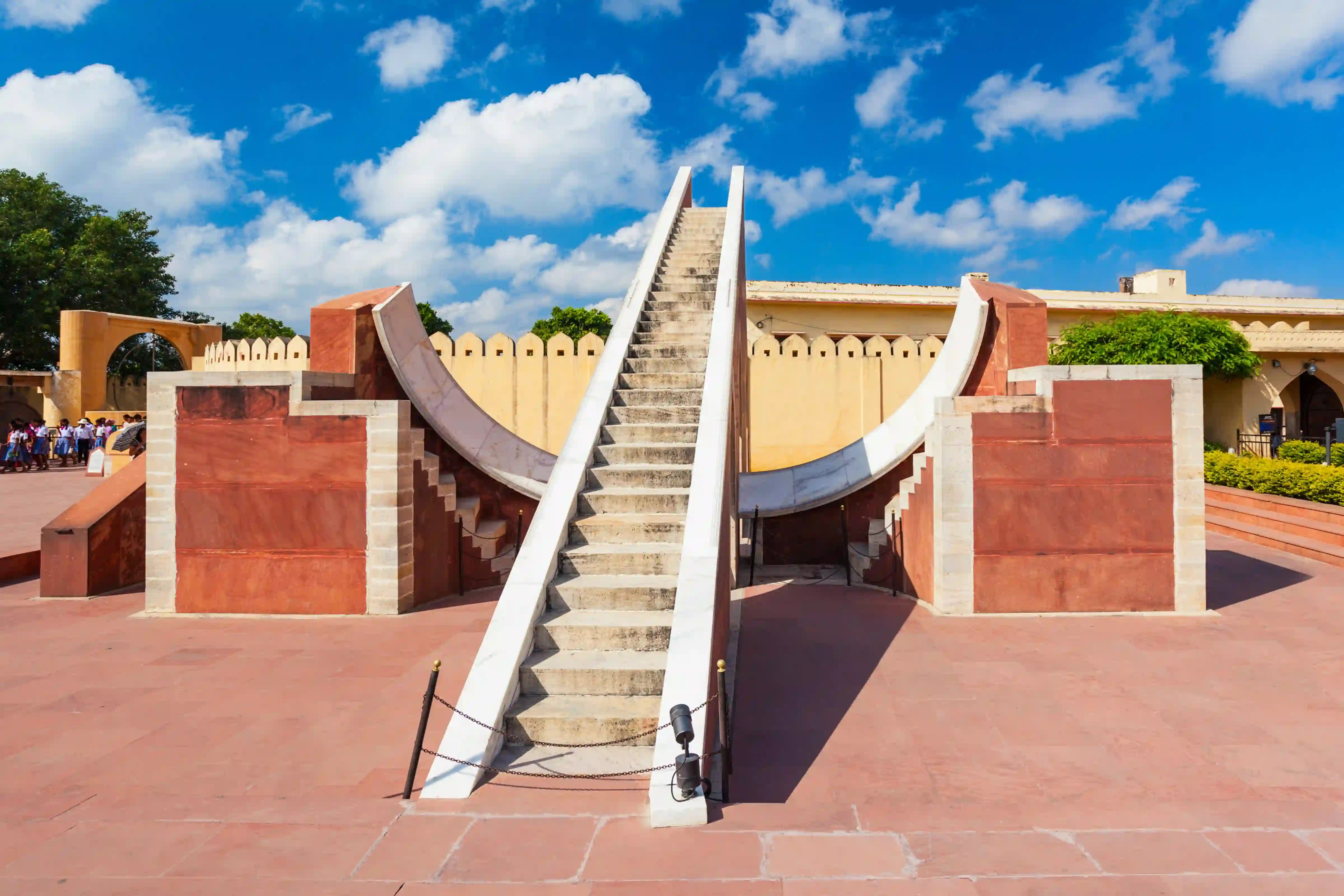
Adjacent to the City Palace lies Jantar Mantar, another UNESCO World Heritage Site. Built by Maharaja Sawai Jai Singh II, this astronomical observatory demonstrates the scientific brilliance of ancient India.
The observatory features massive instruments designed to:
- Measure time
- Predict eclipses
- Observe celestial bodies
- Calculate astronomical positions
Its remarkable precision continues to impress scientists and visitors alike.
Nahargarh Fort – Guardian of the Pink City
Perched on the Aravalli Hills, Nahargarh Fort offers spectacular panoramic views of Jaipur.
Originally built as a defensive structure, the fort later became a royal retreat. Visitors can explore Madhavendra Bhawan, royal chambers, beautifully decorated corridors, and enjoy breathtaking sunset views over the city.
Jaigarh Fort – Home of the World's Largest Cannon
Connected to Amber Fort through underground passages, Jaigarh Fort is famous for housing Jaivana, the world's largest cannon on wheels.
The fort also features:
- Watchtowers
- Water Reservoirs
- Armories
- Royal Workshops
- Historic Temples
Its military architecture showcases the engineering brilliance of Rajput rulers and provides fascinating insights into Jaipur's defensive history.
Jal Mahal – The Floating Palace
Located in the middle of Man Sagar Lake, Jal Mahal appears to float gracefully on the water. Although visitors cannot enter the palace itself, the lakeside promenade offers spectacular views throughout the day.
The palace beautifully reflects Rajput architectural elegance against the backdrop of the Aravalli Hills, making it one of Jaipur's most photographed monuments.
Albert Hall Museum
Albert Hall Museum is Rajasthan's oldest museum and one of Jaipur's architectural masterpieces. Designed in the Indo-Saracenic style, the museum stands proudly in Ram Niwas Garden and attracts thousands of visitors every year.
The museum displays an impressive collection including:
- Ancient Sculptures
- Miniature Paintings
- Metal Artifacts
- Traditional Textiles
- Royal Carpets
- Coins
- Blue Pottery
- An Egyptian Mummy
Its rich collection provides visitors with a deeper understanding of Rajasthan's artistic traditions, royal lifestyle, and historical evolution.
Birla Mandir
Although relatively modern compared to Jaipur's ancient forts and palaces, Birla Mandir has become one of the city's most admired religious landmarks. Built entirely from pristine white marble, the temple is dedicated to Lord Vishnu and Goddess Lakshmi.
The beautifully carved walls depict scenes from Hindu mythology along with inspirational figures from different religions, symbolizing unity and harmony. Visitors appreciate the peaceful atmosphere, elegant architecture, and stunning illumination during the evening hours.
Gaitore Ki Chhatriyan
Often overlooked by tourists, Gaitore Ki Chhatriyan is the royal cremation ground of Jaipur's Maharajas. This peaceful heritage site is famous for its intricately carved marble and sandstone cenotaphs that commemorate the rulers of the Kachwaha dynasty.
Every cenotaph showcases exceptional Rajput craftsmanship with delicate carvings, domes, and pillars. Travelers following this Jaipur Heritage Guide should include this hidden gem for its tranquil surroundings and historical significance.
Sisodia Rani Garden
Built in 1728 by Maharaja Sawai Jai Singh II for Queen Sisodia, Sisodia Rani Garden is one of Jaipur's most picturesque historical attractions. The beautifully landscaped terraced gardens feature fountains, pavilions, and murals inspired by the life of Lord Krishna.
- Terraced Gardens
- Decorative Fountains
- Painted Pavilions
- Krishna-Themed Murals
Its peaceful ambiance makes it an ideal destination for couples, photographers, and heritage lovers.
Galta Ji Temple
Popularly known as the Monkey Temple, Galta Ji is an ancient Hindu pilgrimage site nestled between the Aravalli Hills. The temple complex consists of sacred kunds (water tanks), beautifully painted temples, and natural springs that have attracted devotees for centuries.
Apart from its religious importance, Galta Ji offers breathtaking hilltop views and unique architecture, making it one of Jaipur's most fascinating spiritual destinations.
Patrika Gate
Patrika Gate has become one of Jaipur's most photographed landmarks due to its colorful arches decorated with traditional Rajasthani artwork. Every corridor showcases paintings representing Rajasthan's culture, festivals, wildlife, forts, and royal traditions.
Photography enthusiasts often visit early in the morning to capture its vibrant colors without crowds.
Explore Jaipur's Heritage Markets
Jaipur's historic markets are an extension of its royal heritage. Walking through these colorful bazaars allows visitors to experience the city's traditional craftsmanship while shopping for authentic souvenirs.
Popular markets include:
- Johari Bazaar
- Tripolia Bazaar
- Bapu Bazaar
- Chandpole Bazaar
- Kishanpole Bazaar
Visitors can purchase gemstones, blue pottery, Bandhani textiles, lac bangles, miniature paintings, block-printed fabrics, handcrafted leather goods, and wooden handicrafts directly from skilled artisans.
Taste Traditional Rajasthani Cuisine
Exploring Jaipur's heritage is incomplete without enjoying its famous traditional cuisine. Rajasthan's royal kitchens have influenced local dishes that are now loved by travelers from around the world.
Must-try dishes include:
- Dal Baati Churma
- Laal Maas
- Ker Sangri
- Pyaaz Kachori
- Ghewar
- Mirchi Vada
- Rabri
- Mawa Kachori
Many heritage restaurants combine authentic food with folk music and cultural dance performances, creating a memorable dining experience.
Best Time to Visit Jaipur's Heritage Sites
The ideal season for exploring Jaipur is from October to March. Pleasant weather makes sightseeing comfortable, while festivals such as Diwali, Teej, and the Jaipur Literature Festival bring additional cultural excitement to the city.
Morning visits provide cooler temperatures and fewer crowds, while evenings are perfect for enjoying illuminated monuments and rooftop dining experiences.
Suggested Heritage Itinerary
| Time | Activity |
|---|---|
| Day 1 Morning | Amber Fort & Jaigarh Fort |
| Day 1 Afternoon | Jal Mahal & City Palace |
| Day 1 Evening | Hawa Mahal & Local Markets |
| Day 2 Morning | Jantar Mantar & Albert Hall Museum |
| Day 2 Afternoon | Gaitore Ki Chhatriyan & Sisodia Rani Garden |
| Day 2 Evening | Nahargarh Fort Sunset |
Travel Tips
- Wear comfortable walking shoes.
- Carry water and sunscreen.
- Hire licensed guides at major monuments.
- Book tickets online whenever possible.
- Respect heritage conservation rules.
- Dress modestly when visiting temples.
- Start sightseeing early for the best experience.
Following these simple suggestions will help you enjoy a smooth and memorable heritage journey through Jaipur.
Why Jaipur's Heritage Continues to Inspire Travelers
Jaipur stands as one of India's finest examples of cultural preservation and architectural brilliance. Every fort, palace, temple, museum, and marketplace tells a fascinating story of courage, artistry, and royal tradition that has been preserved for generations.
Following this Jaipur Heritage Guide allows travelers to experience the city's extraordinary history while appreciating the craftsmanship that continues to inspire visitors worldwide. From the majestic Amber Fort to the scientific marvel of Jantar Mantar, every attraction reveals another chapter of Rajasthan's glorious past.
Whether you're admiring intricate mirror work inside royal palaces, exploring UNESCO World Heritage Sites, shopping in centuries-old bazaars, or watching the sunset from Nahargarh Fort, every experience creates unforgettable memories. This Jaipur Heritage Guide offers the perfect introduction to the Pink City's timeless beauty and remarkable cultural legacy.
Conclusion
Jaipur is a city where history comes alive through magnificent forts, grand palaces, ancient observatories, sacred temples, and vibrant traditional markets. Every historical landmark reflects the rich legacy of Rajasthan's royal rulers and showcases extraordinary craftsmanship that continues to inspire travelers today.
Whether you're exploring Amber Fort, admiring Hawa Mahal, visiting the City Palace, discovering hidden heritage sites, or enjoying authentic Rajasthani cuisine, every moment deepens your appreciation of Jaipur's fascinating past. A visit to the Pink City is more than just sightseeing—it's an unforgettable journey into India's royal heritage.
Frequently Asked Questions
1. What is Jaipur most famous for?
Jaipur is famous for its royal forts, palaces, Hawa Mahal, City Palace, Amber Fort, Jantar Mantar, colorful bazaars, traditional handicrafts, and rich Rajasthani culture.
2. Which heritage sites in Jaipur are UNESCO World Heritage Sites?
Amber Fort and Jantar Mantar are UNESCO World Heritage Sites. Additionally, Jaipur's historic Walled City is recognized as a UNESCO World Heritage Site.
3. How many days are enough to explore Jaipur's heritage?
A 2–3 day itinerary is ideal for exploring Jaipur's major forts, palaces, museums, temples, heritage markets, and cultural attractions at a comfortable pace.
4. What is the best time to visit Jaipur?
The best time to visit Jaipur is from October to March, when pleasant weather makes sightseeing, photography, shopping, and outdoor activities more enjoyable.
5. Is Jaipur suitable for history lovers?
Absolutely. Jaipur is one of India's most historically rich destinations, offering magnificent forts, royal palaces, museums, temples, UNESCO World Heritage Sites, and centuries-old architecture that beautifully preserves Rajasthan's royal legacy.