How Can You Explore Old Delhi and New Delhi in One Day?
October 27, 2026
How Can You Explore Old Delhi and New Delhi in One Day?
Delhi is a fascinating destination where centuries of history meet modern city life. From the narrow lanes of Chandni Chowk and the magnificent Red Fort to India Gate, Lotus Temple, and impressive government buildings, India's capital offers countless attractions for travelers. If you have limited time, planning your sightseeing carefully can help you experience the city's most memorable highlights in a single day.
Exploring Old Delhi and New Delhi in One Day is an excellent option for first-time visitors, international tourists, families, couples, and business travelers with a free day in the capital. With a well-planned itinerary, comfortable transportation, and enough time at each attraction, you can discover historical monuments, vibrant markets, local food, and modern landmarks without feeling rushed.
In this guide, you will learn which places to visit, how to plan your route, what transportation to choose, and how to make the most of your Delhi sightseeing experience.
Why Explore Old Delhi and New Delhi in One Day?
Delhi is divided into areas that reflect different periods of Indian history. Old Delhi is famous for its Mughal-era architecture, traditional bazaars, religious landmarks, and lively streets. New Delhi features wide roads, green spaces, colonial-era buildings, national monuments, and contemporary attractions.
Visiting both areas in one day gives you a broader understanding of the city's culture and heritage.
In Old Delhi, you can explore the historic Red Fort, admire the architecture of Jama Masjid, and experience the bustling atmosphere of Chandni Chowk. In New Delhi, you can visit India Gate, Qutub Minar, Humayun's Tomb, and other important landmarks, depending on your available time.
A private sightseeing tour can make the journey easier by reducing transportation hassles and helping you organize attractions according to their locations and opening hours.
Best Places to Visit in Old Delhi
Old Delhi is one of the most culturally rich parts of the capital. Its historic monuments, traditional markets, and street-food culture make it an essential stop for visitors.
1. Red Fort
The Red Fort is one of Delhi's most famous historical landmarks and a UNESCO World Heritage Site. Built by Mughal emperor Shah Jahan in the 17th century, the fort served as an important residence and administrative center during the Mughal period.
Its impressive red sandstone walls, ornate gateways, and historic structures reflect the architectural achievements of the Mughal Empire.
Visitors can explore the fort's designated areas, admire its architecture, and learn about India's history. If you want to enter the monument, check the latest opening hours and ticket information before your visit.
Allow approximately 60–90 minutes for sightseeing, depending on your interests and the time available.
2. Jama Masjid
Jama Masjid is one of India's largest and most celebrated historic mosques. It was commissioned by Shah Jahan and completed in the 17th century.
The mosque is known for its expansive courtyard, impressive domes, tall minarets, and combination of red sandstone and white marble. It remains an important place of worship and a significant architectural landmark.
Visitors should dress modestly and follow the mosque's visitor rules. Access to certain areas may be restricted during prayers or religious occasions.
Plan approximately 30–45 minutes for your visit, allowing additional time if you need to wait for access.
3. Chandni Chowk Market
Chandni Chowk is one of Old Delhi's most famous markets. Its lively streets are filled with traditional shops, textile stores, jewelry sellers, spice merchants, and local eateries.
Walking through this historic market provides an opportunity to experience the everyday atmosphere of Delhi. You can browse traditional Indian clothing, discover colorful shopfronts, and sample popular local snacks.
The market can be crowded, especially on weekends and during festivals. A short walking tour or cycle-rickshaw ride can help you explore selected lanes without spending too much time navigating the area.
Allow around 45–60 minutes for a brief visit.
4. Raj Ghat
Raj Ghat is a memorial dedicated to Mahatma Gandhi, located in a peaceful green setting near the Yamuna River. The black marble memorial marks the place associated with his cremation.
The landscaped grounds provide a quieter contrast to the busy streets of Old Delhi. Visitors can pay their respects and learn about Gandhi's role in India's independence movement.
A visit generally takes around 20–30 minutes, depending on the time available and access arrangements.
5. Old Delhi Street Food
Food is an important part of the Old Delhi experience. The area is known for traditional snacks, sweet shops, parathas, and other regional specialties.
Chandni Chowk and its surrounding lanes offer plenty of opportunities to experience local flavors. Choose a clean, busy establishment with good food-handling practices, especially if you are visiting for the first time.
If you have only one day in Delhi, consider a short food stop rather than spending too much time at multiple restaurants.
Best Places to Visit in New Delhi
New Delhi presents a different side of the capital, with monumental architecture, landscaped avenues, museums, and significant national landmarks.
1. India Gate
India Gate is one of New Delhi's most recognizable monuments. This large war memorial commemorates Indian soldiers who died during the First World War and other conflicts.
The monument stands along a broad ceremonial avenue surrounded by open spaces. It is a popular place for photographs and a useful stop during a city sightseeing drive.
You can admire the structure from the surrounding public areas and learn about its historical significance. Visiting during the late afternoon can be pleasant when temperatures are lower, although traffic and crowds may affect your schedule.
Allow approximately 20–30 minutes for a short stop.
2. Qutub Minar
Qutub Minar is a UNESCO World Heritage Site and one of India's most impressive medieval monuments. The towering minaret is known for its detailed stonework, inscriptions, and distinctive architectural design.
The surrounding archaeological complex includes historic structures and ruins that reveal the development of early Indo-Islamic architecture in Delhi.
Because the complex is spread across a considerable area, allow approximately 45–60 minutes if you plan to explore it properly.
Qutub Minar is located farther south than several central New Delhi landmarks, so it is helpful to plan your route carefully to avoid unnecessary driving.
3. Humayun's Tomb
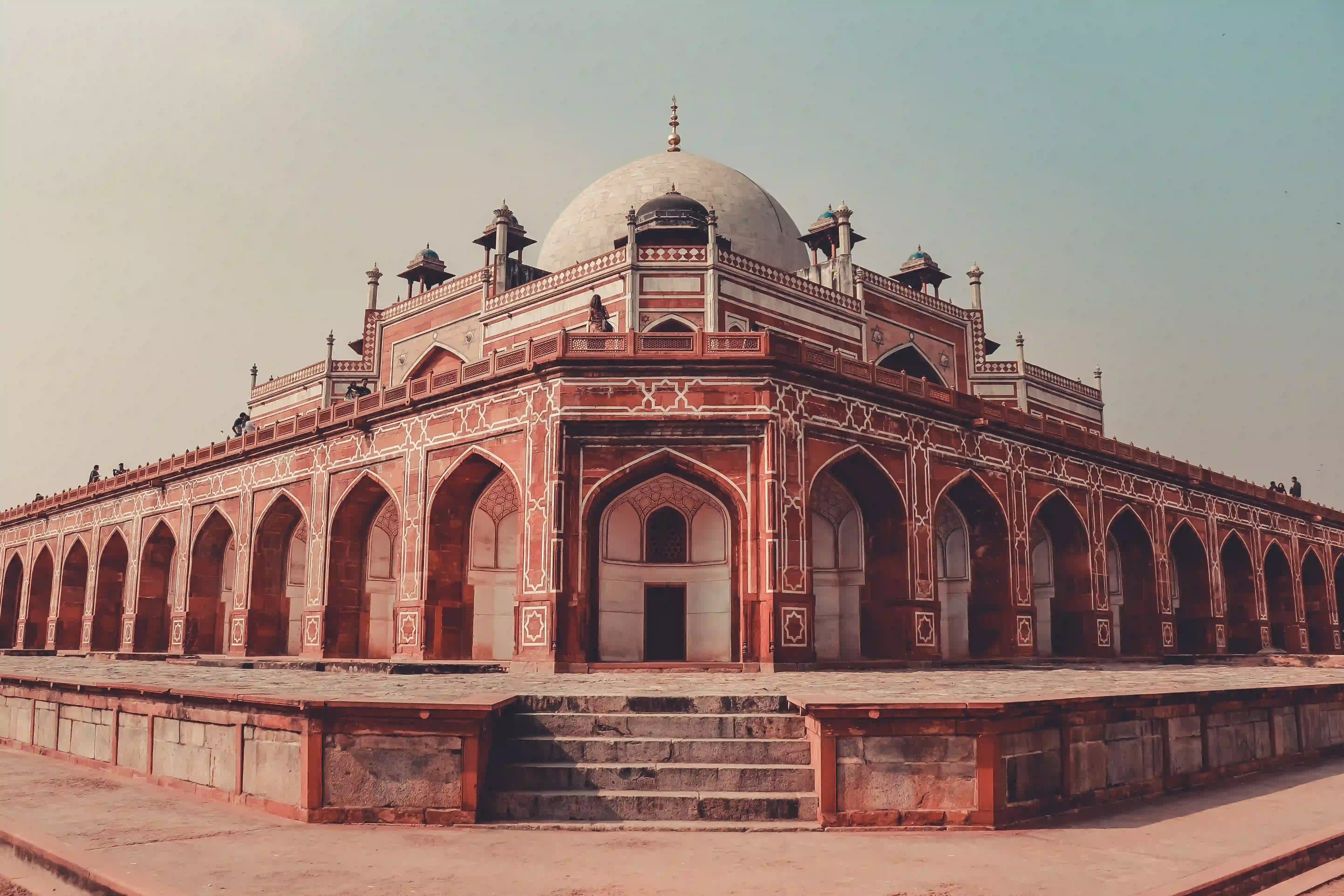
Humayun's Tomb is another UNESCO World Heritage Site and a major attraction for visitors interested in Mughal architecture. Built in the 16th century, the monument features a large garden setting, symmetrical design, red sandstone, and white marble details.
Its architectural style influenced later Mughal monuments, including the Taj Mahal.
The gardens and historic structures make this an excellent destination for photography and a relaxed walk. Allow approximately 45–60 minutes for a visit, depending on your interest in architecture and history.
4. Lotus Temple
The Lotus Temple is famous for its distinctive flower-shaped design and peaceful atmosphere. It serves as a Bahá'í House of Worship and welcomes visitors from different backgrounds, subject to visitor guidelines.
The building's white marble petals create a striking architectural appearance. Inside, the central worship space encourages silence and reflection rather than guided sightseeing activities.
Check the current opening schedule before visiting because the temple's weekly closure and visitor arrangements may affect your itinerary.
Plan around 30–45 minutes, including time for entry and walking through the grounds.
5. Rashtrapati Bhavan and Parliament Area
The Rashtrapati Bhavan complex is an important symbol of India's government and history. The surrounding area features broad ceremonial avenues, landscaped spaces, and monumental architecture.
Visitors can admire the exterior of the presidential residence and nearby government buildings from permitted public viewpoints. Entry inside restricted government areas is not automatically available, and access rules can change.
A sightseeing drive through the central government district can be a convenient way to appreciate New Delhi's planned layout without adding several separate stops.
6. Gurudwara Bangla Sahib
Gurudwara Bangla Sahib is one of Delhi's most prominent Sikh religious sites. It is recognized for its golden dome, peaceful atmosphere, and community kitchen, known as the langar.
Visitors from all backgrounds are welcome to experience the site respectfully. Cover your head, remove your shoes where required, and follow the instructions of the staff and volunteers.
This can be a meaningful addition to a Delhi sightseeing itinerary, particularly for travelers interested in India's religious and cultural diversity.
Allow approximately 30–45 minutes if time permits.
One-Day Delhi Sightseeing Itinerary
A successful itinerary should balance sightseeing with travel time. Delhi traffic can be unpredictable, so avoid planning too many lengthy monument visits in a single day.
Morning: Explore Old Delhi
- 8:00 AM: Begin your sightseeing journey in Delhi.
- 8:30 AM: Visit the Red Fort area and explore the monument if it is open.
- 10:00 AM: Visit Jama Masjid, subject to prayer schedules and visitor access.
- 10:45 AM: Explore Chandni Chowk by walking or cycle rickshaw.
- 11:45 AM: Enjoy a short stop for local snacks or refreshments.
Afternoon: Discover Central and South Delhi
- 12:30 PM: Take a break for lunch.
- 1:30 PM: Visit India Gate and the central government district.
- 2:15 PM: Continue toward Humayun's Tomb.
- 3:30 PM: Visit Qutub Minar if travel time and opening hours allow.
Late Afternoon: Choose an Additional Attraction
- 4:45 PM: Visit the Lotus Temple or Gurudwara Bangla Sahib if time permits and the attraction is open.
- 5:30 PM: Finish sightseeing or return to your hotel.
This is a sample plan rather than a guaranteed timetable. Actual visit durations depend on traffic, queues, monument opening hours, security checks, and the day of the week.
If you prefer to enter several monuments instead of viewing them from outside, select fewer attractions and spend more time at each one.
How to Plan Old Delhi and New Delhi in One Day
The key to Old Delhi and New Delhi in One Day is choosing attractions that fit your interests and arranging them in a logical order.
Start Early in the Morning
Beginning early gives you more time for sightseeing and can help you avoid some of the midday crowds and heat.
Check the opening hours of the monuments you want to enter. Some religious sites follow prayer schedules, while certain attractions close on particular days.
An early start is particularly useful if you want to explore Chandni Chowk before it becomes too crowded.
Choose a Logical Route
Delhi's attractions are spread across a large area. Visiting nearby landmarks together can reduce travel time.
For example, you can explore the Red Fort, Jama Masjid, and Chandni Chowk during the same part of the day. You can then continue toward India Gate and other central landmarks before heading south to Humayun's Tomb or Qutub Minar.
The best order depends on the day of your visit, traffic conditions, and the attractions you want to enter.
Decide Which Monuments to Enter
Trying to enter every major monument in one day can make your trip exhausting. Some places require more time than others, especially when security checks, ticket queues, and walking distances are involved.
Choose two or three priority monuments for longer visits and enjoy the remaining landmarks through shorter stops or exterior views.
If historical architecture is your main interest, prioritize the Red Fort, Humayun's Tomb, and Qutub Minar. If you prefer local culture, spend more time around Jama Masjid and Chandni Chowk.
Keep Time for Food and Rest
Sightseeing can involve considerable walking, particularly in Old Delhi. Include time for water breaks, meals, and short rests.
Wear comfortable footwear and carry sun protection during warmer months. In winter, check the weather and visibility conditions before setting out, as fog can sometimes affect road travel.
Best Transportation for Delhi Sightseeing
Choosing the right transportation can make your day much more comfortable.
Private Car with a Driver
A private car is a convenient choice for visitors who want to explore multiple areas without arranging separate transport for every stop.
It provides flexibility, air-conditioned travel when available, and convenient transfers between major attractions. You can also adjust the itinerary according to traffic or your interests.
However, some narrow lanes in Old Delhi are unsuitable for cars. You may need to leave the vehicle at an appropriate parking area and explore parts of Chandni Chowk on foot or by cycle rickshaw.
Delhi Metro
The Delhi Metro is an efficient option for reaching many parts of the city. It can help travelers avoid road congestion and is particularly useful when visiting attractions near metro stations.
However, you still need to consider walking distances, station transfers, ticketing, and transport between locations that are not close to a station.
The metro is suitable for independent travelers who are comfortable navigating public transportation.
Auto-Rickshaws and Cycle Rickshaws
Auto-rickshaws are useful for short journeys, while cycle rickshaws can be a memorable way to experience selected lanes in Old Delhi.
Confirm the fare or use an agreed booking method before starting your journey. Follow local traffic and safety guidance, particularly in crowded areas.
For many visitors, combining a private car for longer transfers with walking or a cycle rickshaw in Old Delhi offers a practical balance.
Private Delhi Tour or Independent Sightseeing: Which Is Better?
Both options can work well, depending on your budget, travel style, and familiarity with the city.
A private tour is useful for first-time visitors who prefer a planned route, convenient transportation, and help organizing their sightseeing day. It can also be helpful for families, older travelers, and people with limited time.
Independent sightseeing may suit budget-conscious travelers who enjoy exploring at their own pace and are comfortable using the metro, public transport, and navigation apps.
When comparing tour options, check what is included in the price. Transportation, guide services, monument tickets, meals, parking, and taxes may be charged separately.
If you want to understand the city's history in greater detail, consider a qualified local guide who can explain the background of its monuments and neighborhoods.
Best Time to Visit Delhi
The most comfortable months for outdoor sightseeing are generally October through March, when temperatures are often more suitable for walking and exploring monuments.
October to March: These months are popular for city sightseeing. Winter mornings can be foggy, so allow extra travel time and check visibility conditions.
April to June: Temperatures can become extremely hot. Start early, carry water, wear lightweight clothing, and limit outdoor walking during the hottest hours.
July to September: Monsoon conditions can bring humidity and rain. Carry an umbrella or rain protection and allow flexibility in your schedule.
Delhi's weather varies from year to year, so check the forecast shortly before your visit.
What Should You Wear and Carry?
Comfort and preparation are important when exploring a busy city for a full day.
Consider carrying:
- Comfortable walking shoes.
- A reusable water bottle.
- Sunscreen, sunglasses, and a hat.
- A small bag for essential belongings.
- A fully charged phone and a power bank.
- Some cash for small purchases and local transport.
- Appropriate clothing for visiting religious sites.
Keep your belongings secure in crowded markets and follow the entry rules at each attraction. Some monuments have restrictions on bags, food, photography, or other items, so review the rules before arrival.
How Much Does a One-Day Delhi Tour Cost?
The cost of a Delhi sightseeing day depends on your transportation, group size, guide requirements, monument entries, and meal preferences.
Independent travelers may spend less by using the metro and visiting selected attractions. A private car tour generally costs more but offers convenience and greater flexibility.
Before booking a tour, check whether the price includes:
- Hotel pickup and drop-off.
- A private air-conditioned vehicle.
- A professional guide.
- Monument entrance tickets.
- Parking and toll charges.
- Meals and refreshments.
- Applicable taxes.
Compare the complete inclusions rather than choosing a tour solely because it has the lowest advertised price.
Is One Day Enough to Explore Delhi?
One day is enough to experience several major attractions and get an introduction to Delhi's history and culture. However, it is not enough to explore every important monument, museum, market, and neighborhood in depth.
For a first visit, focus on a manageable combination of Old Delhi's historic landmarks and New Delhi's best-known monuments. If you have additional time, consider a second day for museums, local markets, cultural experiences, or attractions you could not fit into your first itinerary.
Travelers who want to visit many monuments from inside should reduce the number of stops rather than rushing through each location.
Tips for a Memorable Delhi Sightseeing Experience
Keep these practical tips in mind when planning your trip:
- Book transportation in advance: This can make hotel pickup and transfers easier to organize.
- Check opening days: Confirm monument schedules and religious-site access before traveling.
- Start early: An early departure gives you more flexibility.
- Avoid overplanning: Select your priority attractions and leave time for traffic.
- Carry water: Stay hydrated, particularly during hot weather.
- Respect local customs: Follow dress codes and photography rules at religious sites.
- Allow for traffic: Road conditions can affect your arrival times.
- Confirm tour inclusions: Check guide services, entry tickets, and additional charges before booking.
Conclusion
Delhi offers an unforgettable mix of Mughal history, traditional markets, religious landmarks, and modern architecture. From the impressive Red Fort and the lively streets of Chandni Chowk to India Gate, Humayun's Tomb, and Qutub Minar, the capital has something for almost every traveler.
With careful planning, you can experience Old Delhi and New Delhi in One Day without spending the entire day traveling between attractions. Start early, choose a practical route, prioritize the monuments that interest you most, and leave enough time for food and rest.
Whether you prefer a private car, the Delhi Metro, or a guided sightseeing experience, a well-organized day can help you discover the city's most memorable highlights and create lasting travel memories. To organize your sightseeing, explore this Old Delhi and New Delhi in One Day tour option.